I must admit that prior to watching this I knew very little about bullfighting, and after watching this I still feel like I don’t know very much about the customs, the history nor what makes for the best bullfighter among the very best, other than surviving in the ring. We don’t come away from this documentary understanding who Andrés Roca Rey is outside of him being a bullfighter, other than the fact that he is very good at bullfighting considering how much of the film’s runtime is spent with him in the ring. He dominates day in and day out as the crowd cheers every time he walks away to live for another day. But the film is less about celebrating Rey’s life and accomplishments, and more about a rumination on death and exploitation through the provocative imagery.
I actually wonder how Serra was able to get permission from Rey and his team to film him in this fashion. It’s quite clear from the get-go that the documentary’s position does not do Rey any favors, although it’s also not trying to condemn Rey for what he is doing either. While the film is not quite an institutional analysis on bullfighting nor does it focus on the moving gears behind a match, there’s a Frederick Wiseman-like quality to Serra’s approach on the ethical horrors behind bloodsport and the slaughtering of bulls. And let me tell you, a lot of bulls get slaughtered in this film – it’s definitely not for the squeamish. Some grisly images here that will forever stick in my mind for me from the first bull killing, in which the bull’s eyes widen as a knife is stuck into its head to when Rey has a close call as the bull nearly impales him to a wall.
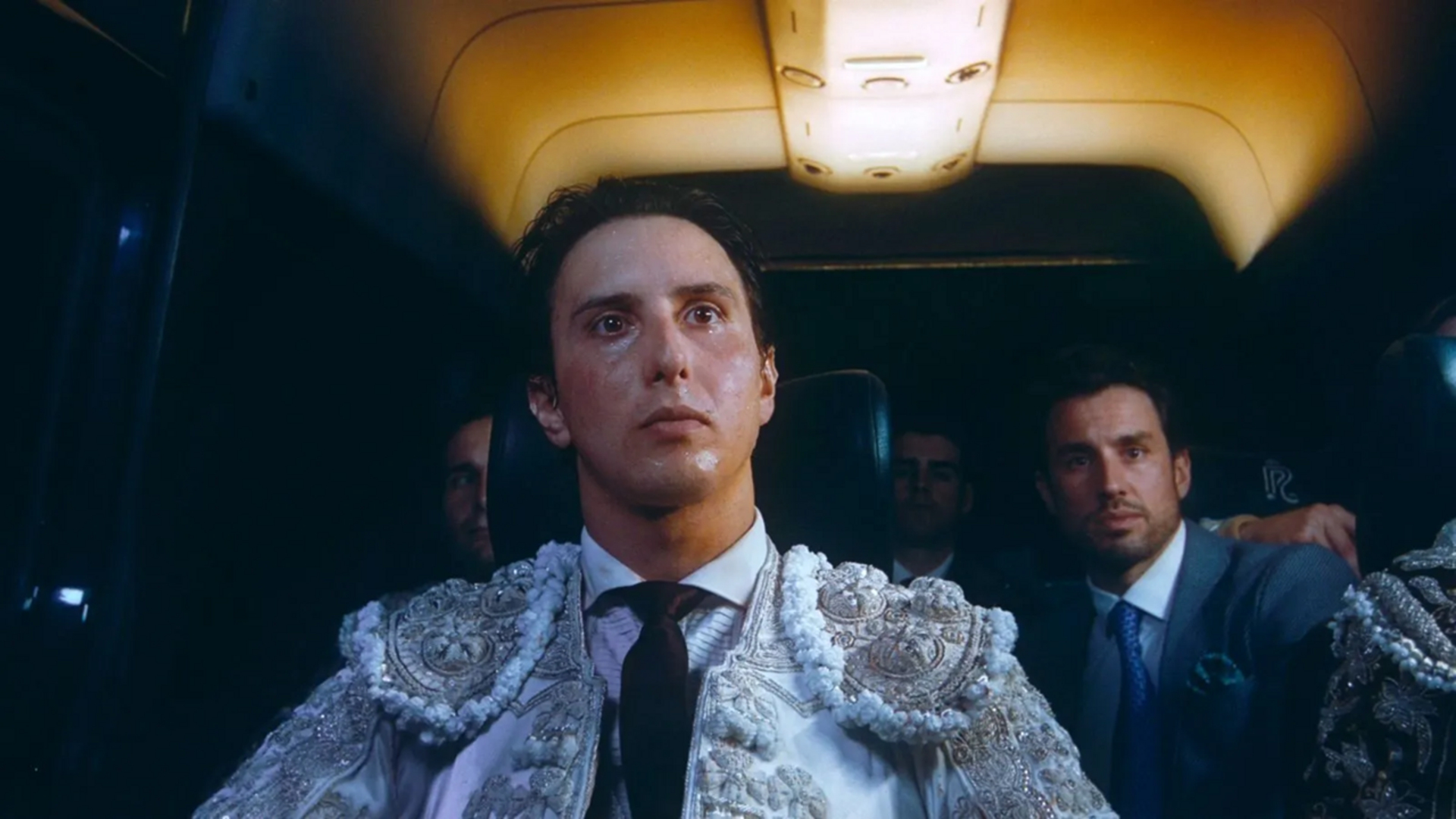
We do get to spend some time outside of the ring with Rey and his entourage in the car, generally after a bullfighting match where his team (and other supporters outside) congratulate him on his success each time. The only other scenes outside of his fights show Rey in his hotel room getting ready for his next fight – we get a sense that this is what his life revolves around. There is an interesting queer subtext with one moment where Rey is putting on the pink socks and what almost looks like a corset as part of his bullfighting uniform, which plays a nice juxtaposition with the whole masculine tradition and role of a bullfighter in Spanish culture.
Eventually even the images of bulls dying start to lose their lustre as we get to the second half as we Rey tear through bull after bull, almost as if we’re being desensitized by the violence as it goes on. Perhaps that may be part of the point – that after the initial shock, we arrive at the mindset of those who would consider this to be exciting, and what many would consider to be entertainment eventually gets deduced down to uneventful mundane banality over the course of the film. But I’m not sure that’s quite a strong enough condemnation of the practice, as the repetition of Rey knocking down bulls time and time again does start to veer into borderline cheap exploitation when the movie does not have much else to offer beyond that. But there’s no denying that the long-take cinematography is excellent. I’m very curious as well about the sound recording process – it seems like they used lav mics, but the constant movement during the bullfighting sequences seems to not have affected the recording all that much in spite of him even getting pushed around. Either way it sounds great, it’s crisp and clear, much like the messaging.