Meet Joe and Angela, a married couple. Joe is currently a teacher at a small local music school. We see this in the opening scene where an orchestra is performing for Joe, yet Joe does not pay any attention. He gives little feedback to them and leaves, much to the confusion of the performers on stage. Joe reminisces on the good old days. He was in love with his wife, and he was part of a band that had a big hit, but those days are long gone. He no longer plays the piano that is just sitting there in his apartment, collecting dust. He suffers from chronic back pain, made worse as a result of him carrying his (foldable) bike up to his apartment that he shares with his wife, Angela.
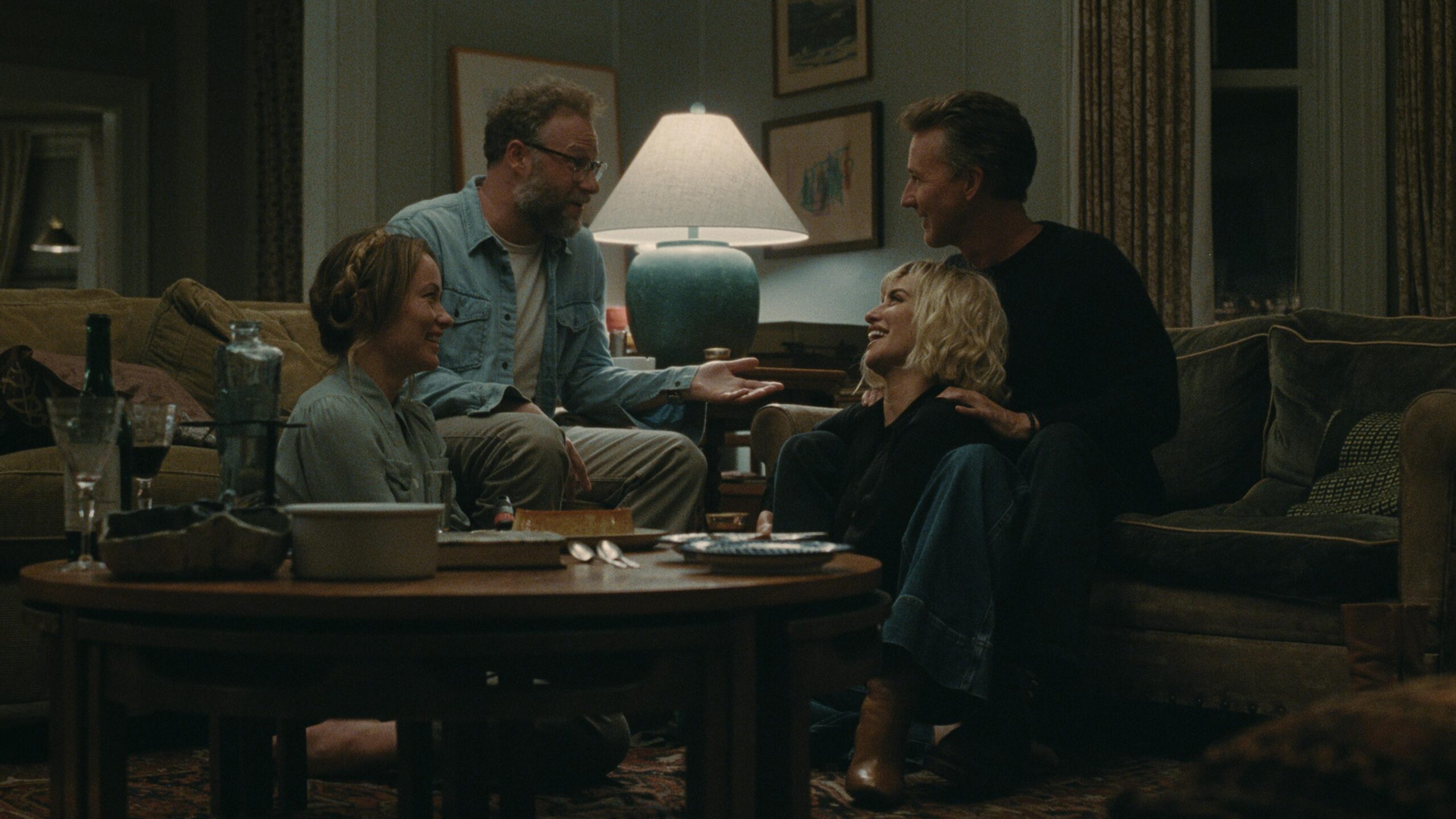
Angela, on the other hand, is a stay-at-home wife to Joe. She has invited the upstairs neighbors, Pina and Hawk over to visit their newly renovated apartment. She has also prepared a big meal to celebrate the occasion, something that irks Joe as he complains about her staying at home all day doing nothing but decorating the entire apartment and buying pillows and rugs. Angela snaps back, telling Joe he was supposed to buy some wine for the occasion yet he forgot to do so. He also complains about Angela not telling him about the evening’s plans – even though Angela says she already told him she was going to invite people over. Either way he threatens to complain to Pina and Hawk about the ruckus they make upstairs every night. It is during the middle of this argument that the doorbell rings to signal their arrival. Angela greets them as if nothing happened before that, but Pina and Hawk later on mention that they overheard part of their argument outside the door. Much like the audience, they too feel the awkwardness. And so it begins.
The following tension plays out quite similarly to a scene I’m thinking of in the Woody Allen movie Interiors. It’s when Geraldine Page’s character Eve visits the apartment of her daughter Joey and gifts her a $400 vase that she bought for the foyer, which Joey’s boyfriend Michael initially rejects. She critiques the placement of the lamps and color matching within the apartment, much to the annoyance of Michael. A lot of this is a cover for Eve’s unwillingness to address the real problems she is dealing with in her life as well as her deteriorating relationship with Joey. I interpret Angela’s behaviour of distracting herself from her own problems in her personal life as being pretty similar to Eve’s. She uses the apartment renovation both as a ruse for the fact that Joe and Angela don’t often get a lot of visitors to their apartment (as indicated by the lack of wine), as well as an unwillingness to appear too confrontational towards their neighbors about the noise. She makes the initial connection with Hawk over a newly bought rug as well as a shared interest in the art pieces that she carefully curated all over the apartment, and the film brilliantly plays on that chemistry and awkward sexual tension between the two of them over our understanding of Angela’s lack of fulfillment in her marriage. Every time Joe wants to bring up a complaint towards Pina and Hawk, Angela very quickly shuts it down – via offering a tour of the apartment to them instead, or providing food and so forth. All this effort for the purposes of delaying the inevitable, bottling it up to a boiling point, ready to be spilled out later.
The acting performances are excellent; we spend so much time together with these four people that it never feels like anybody is treated as a side-character along the journey. Seth Rogen’s snarky one-liner delivery that is a reflection of his own resentment towards life and his inability to hide it is on point; plus there’s a scene involving him and Penelope Cruz’s Pina dancing together with a particular line of dialogue that got me laughing the hardest in the entire film. Olivia Wilde as Angela always feels like she is trying to hold the fort together without any emotional support from Joe, while simultaneously being on the verge of a nervous breakdown. Her direction in this is a step-up from a film like Booksmart: there’s a shot here involving Joe’s back reflected on the mirror while Angela is talking to him that showcases far better blocking and visual language than any of the cinematography in Booksmart (and that’s not a knock against Booksmart as a film necessarily). Edward Norton is also great as the passive-aggressive Hawk, who simultaneously tries to act gracious towards Joe’s lack of hospitality while also trying to hide his contempt for him.
While I was anticipating some sort of reveal that this was all going to lead up to polyamory given the setup involving these couples, I do think the film does a decent job of not giving into the usual tropes concerning that subject matter. Normally there would either be unspoken history between two people within the group that causes things to unravel, or the film would present polyamory as a solution for the couple’s troubles and that’s the end of it. On one hand I think much of it works, on the other hand I’m still not totally sure how I should feel about the ending; I can understand the ambiguity and the open interpretation concerning the relationship. There is something very poetic about how letting go allows for a guy like Joe to realize all along what he was truly missing from his life. But on the other hand, the conversations and revelations that have transpired have taken a very wild turn (which is not to say that the progression doesn’t feel natural or that it feels too hasty per se). I don’t understand how you would be able to look each other in the eye afterwards thinking that everything that happened is somehow normal, or that you can just simply hand-wave everything away and pretend nothing ever occurred. But as for the rest of us on the outside looking in, it’s a pretty funny time. Perhaps we should be glad we were never invited to begin with.