The following review contains spoilers for the film.
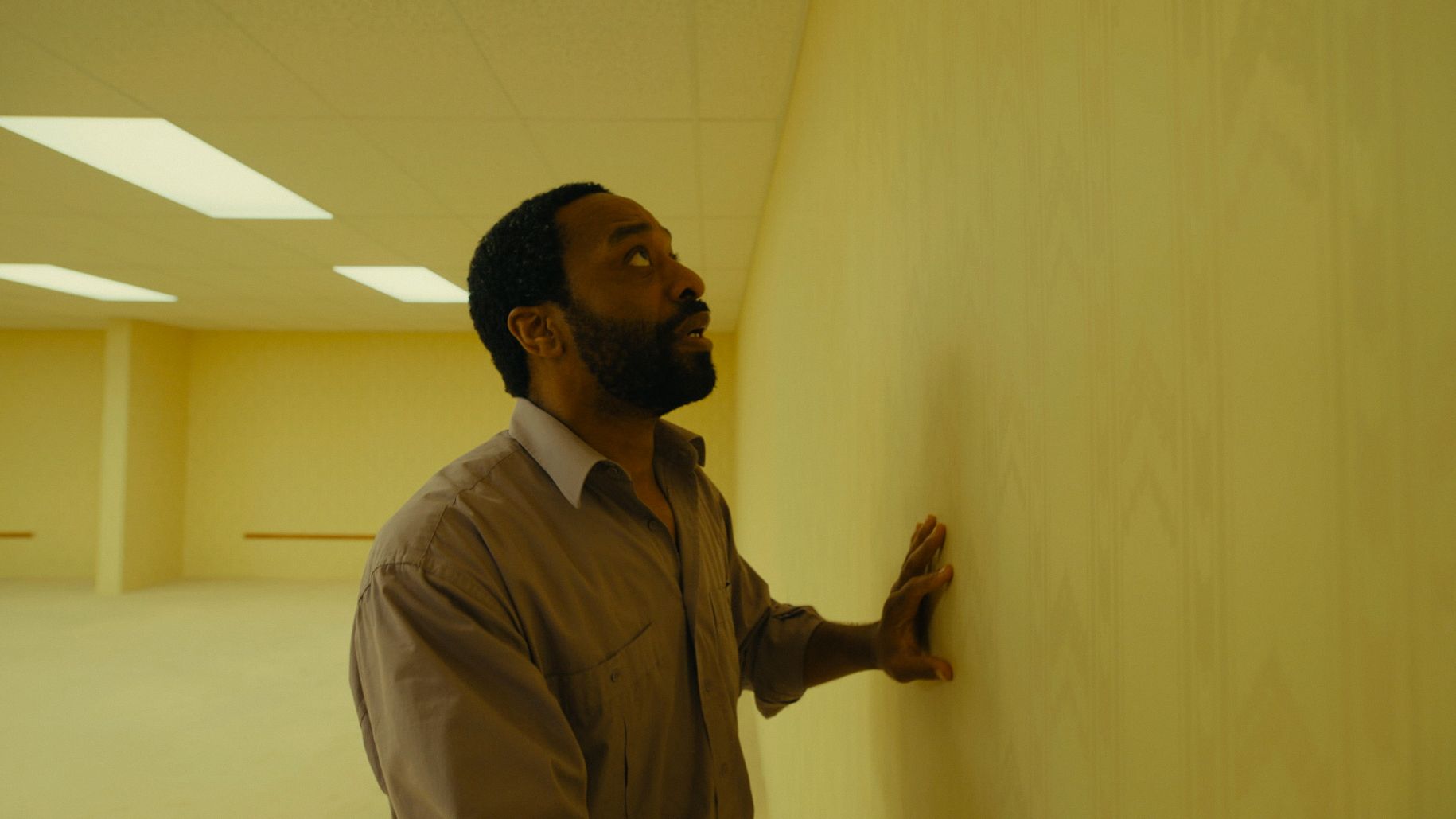
It all started with an old photograph taken in 2003 of an old furniture store (that currently no longer exists) which was under renovation at the time in Wisconsin. The photograph depicted a series of empty rooms with yellow walls and floors, an early precursor to what we would nowadays call a liminal space, giving this unnerving sense of feeling that something is not quite right with the emptiness and openness of it all. It was not until the 2010s, however, when an anonymous user on 4chan posted a story of the Backrooms complete with that particular photograph attached, beginning a new online phenomena that would only continue to grow from there. You can also attribute part of this growth to director Kane Parsons himself, who in 2022 began uploading his own videos of the Backrooms that were done using tools like Blender and Adobe After Effects. His first video became an instant viral success, spawning an entire online series of videos, which culminated in Parsons getting a deal with A24 to make a feature-length film on the Backrooms, becoming the youngest filmmaker ever under A24 at just 20 years old, as the marketing for this movie would like to tell you.
The very idea of a film based entirely on an online creepypasta isn’t entirely new – some folks may (or may not) remember the Slender Man film back in 2018 that came years past the sell-by date of the Internet urban legend and went. We live in an era of a young generation who grew up online, some of whom became content creators on social media platforms like YouTube and are now the rising new filmmaking talent and voices, as seen with Curry Barker’s Obsession and the RackaRacka twins with their two features Talk to Me and Bring Her Back. There is unprecedented levels of access of different mediums of artistic expression that young filmmakers can draw their own creative influence from – Parsons himself has stated that he owes a great deal to the Portal video games. The games play around with liminal-like spaces, marked with drawings all over the walls showing that there were once people who were there long before our playable protagonist Chell, plus the entire setting is a run-down research laboratory. The Backrooms seem to operate on similar principles – the reveal of the origins of the Backrooms later on in the film feels like a nod to that particular setting of the Portal franchise.
Even at such a young age, Kane Parsons shows good command of the cinematic language – he knows how to exert patience and the importance of slow tension build-up with the very effective found-footage opening sequence that admittedly made me jump upon the encounter with the Entity inside. The found footage portions are quite well-done and are the most effective parts of the film for me – probably because these are the sequences that do not fall to certain shortcomings that you might expect from a first-time filmmaker of that age, and they are most representative of the YouTube videos that Parsons had established his name on from the beginning. Where I think the film starts to become less effective is in the sequences that exist outside of the Backrooms themselves – we transition from that excellent opening sequence inside the Backrooms to a therapy session involving our protagonist Clark and therapist Mary. The movie really over-explains Clark’s struggles as a guy deteriorating in the face of his separation from his wife and family, who feels isolated (much like Mary herself in a way) and is a chronic alcoholic. This exposition dump seems to be there for the sake of doing the legwork for the audience to notice the connection between the Backrooms as a reflection of Clark’s own mental state, without the audience having to draw that connection themselves. Even more so when Mary later on discovers the Backrooms herself in her search for Clark – big loud suspenseful music plays to indicate something scary will happen or to anticipate something surprising. Yet we already know that’s the entrance, we know by that point what the first room looks like through Clark’s perspective, and the reveal with the camera going between the walls of the furniture store and the Backrooms as Mary steps through ultimately has no surprise to it. Not very suspenseful, isn’t it? (Perhaps Mary should also be calling the police first to investigate rather than wander into there herself, but a trope like that that might be the lesser of the film’s problems in this case.)
The portion of the film involving Mary’s journey and exploration into the Backrooms also suffers from similar problems as the climax involves Mary flailing around in what is otherwise an almost-but-not-quite identical copy of the furniture store setting, bashing the head of a giant demented pirate version of Clark in the Backrooms while the real Clark could not even overpower him. Worth mentioning is the appearance of a character Phil who explains the origins of the Backrooms via the backstory of the former MRI company concentrating their efforts into researching the Backrooms, which admittedly only serves to keep the Backrooms ambiguous rather than definitive in its meaning and themes. There’s clearly a ploy here to set-up a future instalment in this series – which will most likely happen, but makes me wonder if even those future instalments will only continue to serve the ambiguity rather than commit to any one interpretation. Is Clark’s furniture store and the shots of endless suburbia a reflection of the current economic decline and downfall of America? What about the comparison between the fallibility of AI-generated imagery and human memory? You can draw some ideas here – but with the lack of commitment, there’s not very much to ruminate on. Still, I like to look at how good a film is by judging the beginning and whether or not the final shot is a memorable one – and in this case, both are true. Even in its ineffective moments, it’s hard not to be drawn by the whole concept and notion of the Backrooms to begin with, as well as what Kane Parsons has in store for the many years to come.