I was recently acquainted with a slice of Lowder’s work during a screening of short films by filmmakers from the School Friedl Kubelka at the TIFF Lightbox in Toronto. So when I first heard of the opportunity to watch more of her films in full on 16mm prints, I knew that I had to see her work as it should be seen, given the analog nature of her film-making. While you can watch some of her work online at the Light Cone website, I find the effect of watching those films as a digitally compressed video file doesn’t really add up to the same experience – much of her work is so dependent on detail and vibrant colors, and both are completely lost in the rather poor quality digital scans of her work (at least as far as the ones I could find online seem to show). A warning as well: not recommended to watch her films if you are epileptic due to the flickering which I will explain below.
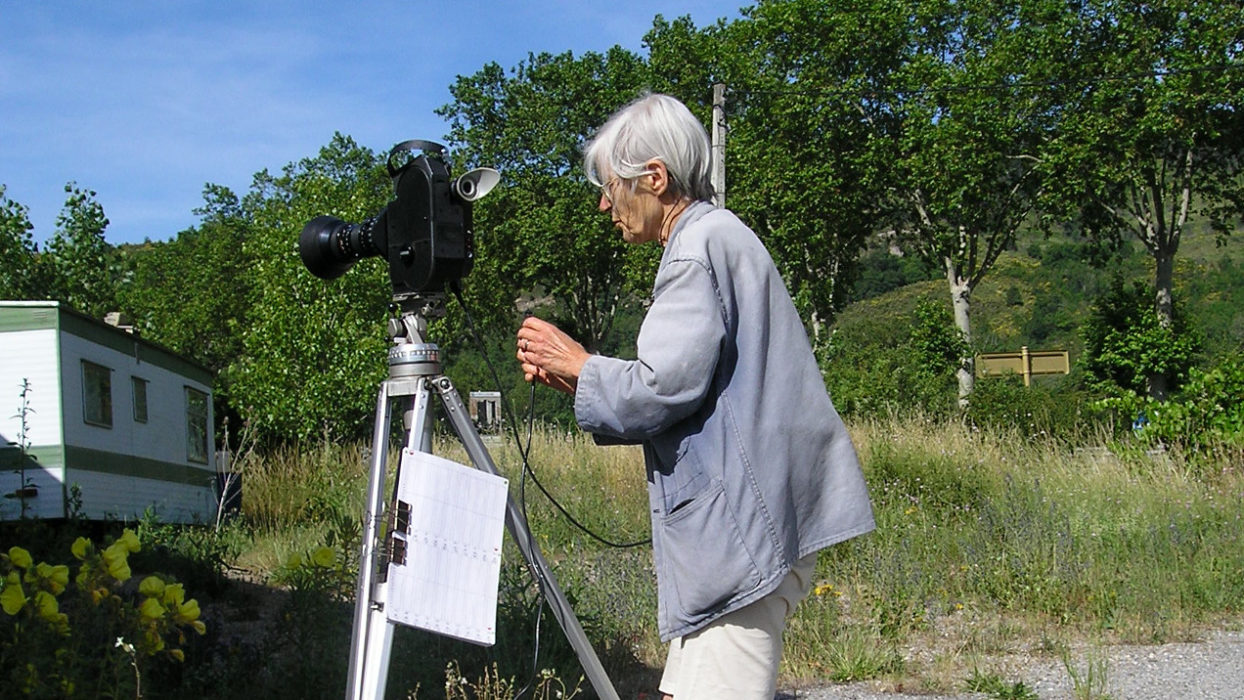
Her creative process is a very rigorous one: she does everything in-camera, using her Bolex to shoot frame-by-frame a series of images for every even frame, skipping the odd frames and not exposing them. She would rewind the footage, then look at a different subject some period of time after having filmed the first set of images, perhaps in a different place altogether. She then proceeds to film those different images over the skipped empty frames from before. Watching the final result has the effect of the two separate sets of images appearing together simultaneously, even though they were not filmed simultaneously to each other and the contexts behind those two sets of images are much different from each other. Much of her work focuses on the flora and the natural environments around her as well as the people who inhabit those environments, drawing from her background as a painter. There are even notebooks from Rose Lowder that anybody can purchase that go into further detail on her process behind making the Bouquets films, for those curious enough to explore further.
The films I watched on 16mm prints at the CineCycle in Toronto are listed below with some quick thoughts on them:
Rue des Teinturiers
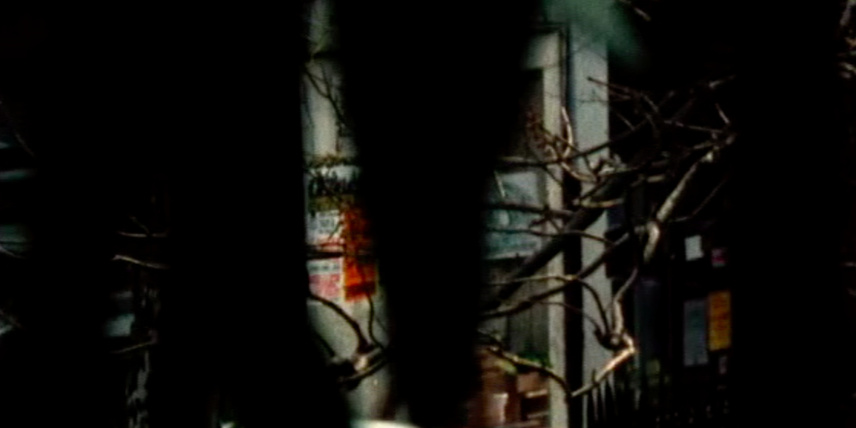
Watching this kind of feels like you’re constantly closing one eye and switching your vision back and forth between the left and right eye, which gives a sightly different perspective of the image you’re seeing in reality depending on which eye you’re using. In this case, it results in this effect where the constant flickering back and forth almost makes the two images combine together in this very unique perspective that I am describing, where at times it’s like you’re seeing through the plant in the foreground, observing what’s behind it – such as a city street with the cars and the pedestrians walking about. But the consistent rhythmic shift in between the two images also creates another effect where it’s like the film has a constant visual “heartbeat”, with the plant foregrounded within the frame shrinking and moving slightly every other frame as our perspective shifts to the other image that appears as if it’s in the background (for example, the city street), then expands out again as we switch to the next frame and so forth. My written explanation of what’s happening doesn’t do justice to how rapid this effect occurs – it’s a constant flickering frame-by-frame. It’s a bit long at over half an hour, and it did feel like I got the gist of it about halfway in, but the effect is pretty neat and mind-bending either way and you’ll be hard-pressed to find anything else like it.
Bouquets 1-10 (1995), Bouquets 21-30 (2005), Bouquets 11-20 (2011)
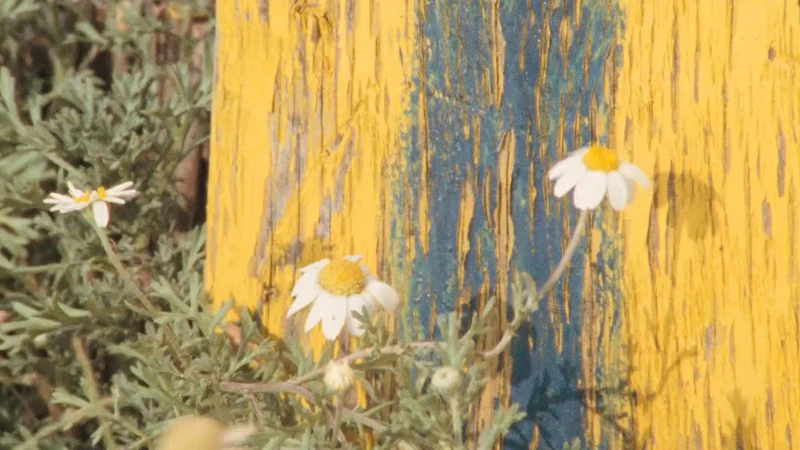
I should also mention that the entire screening was accompanied by some loud dance music blaring outside of the building – the screening room wasn’t exactly the most soundproof, and these films are silent and do not have any music included with them. But the dance music outside actually kind of fits with the images flickering back and forth to the beat, like the flowers themselves were dancing to the rhythm. Experimental avant-garde flower rave cinema wasn’t something I was expecting while watching these movies, but it’s certainly a welcome effect given the rhythmic nature of these films.
Each instalment in the Bouquets series runs 10 minutes long, comprised of 10 short films that last a minute each. Altogether the selection of Bouquets films I saw ran for over 30 minutes (which did not include Bouquets 31-40). Bouquets 1-10 has the most flickering back and forth between the images out of the whole Bouquets compilation, with it and and Rue des Teinturiers having a fixed flickering rhythm. Some of the images are concentrated around people on boats out in the lake, the flickering making them appear less like physical beings by the water and more like traces of memories of these people (and the boats) flickering in your head. Later films in the Bouquets series see Lowder experimenting with more variable and unpredictable rhythms, with more of an emphasis towards slightly longer takes (or at least takes that last for far more than just a still frame) rather than just adhering to a typical frame-by-frame approach that encompasses many of her works. Both 21-30 and 11-20 are preoccupied with the farm life, observing the day-to-day life of the people who live out in the rural countryside as well as the farm animals – the cows, the buildings and even a segment involving koi fish and streaks of water matching together with the streaks of flowers in 21-30.
There seems to be careful emphasis on how these different one minute segments are meant to complement each other. The selection process does not feel totally random – there are thematic threads that tie these different images together and make each segment feel as if they’re part of one cohesive whole. Each one in the series also serves as an interesting snapshot into Lowder’s own artistic trajectory and evolution at that point in time. I’d be curious to explore more of her other works, particularly Bouquets 31-40 to see how she continues to evolve from here.