There was a time in my life when I worked on many indie short film productions in various capacities – acting, sound, even directing, you name it.. Watching Mockbuster, I was thinking back to my own experiences and struggles making my own stuff or helping others make their own films. One time I recall we were filming at a local park that had the perfect cliff-side view for what the director had envisioned, looking out into the open water on a beautiful, hot summer day. The film involved only a small central group of characters with nobody else around. We were set to film for just that one day, but there was a constant problem that kept coming up: we were also right next to a very popular walking trail. So we were often frequently stopping the production every time anybody would walk by, talking or making noise that would only disrupt the filming.
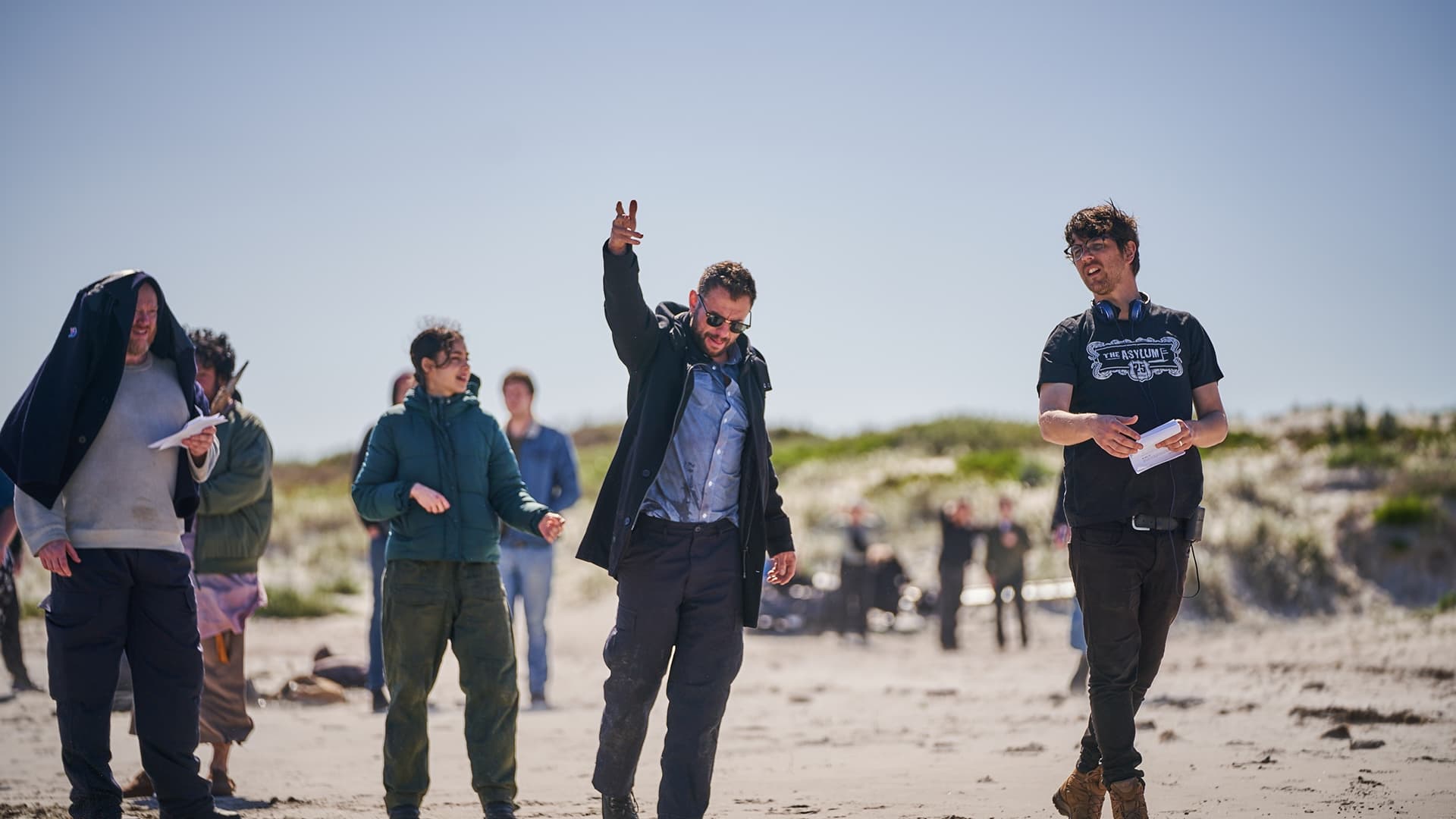
The scene in Mockbuster where they’re filming at the beach, struggling to figure out how to deal with the random people parasailing in the background reminded me so much of my own experiences working on these low-budget sets, plus many other insightful moments revealed throughout the entire documentary of what it’s like to be working on a film production by The Asylum. To keep it very brief, The Asylum is a production studio that specializes in making low-budget mockbusters – films made for the purposes of piggybacking off of another major blockbuster movie (either part of a franchise or involving the same premise) and its popularity. Their high output of films are released direct-to-video rather than in theatres. Their small production costs means they can almost always guarantee a profit for every movie they put out.
Mockbuster is centred around director Anthony Frith’s experiences of directing his first feature-length film under The Asylum. Some illuminating facts about working for The Asylum include how you can just send an email to The Asylum asking for a directing job and you’ll get one. But things are not that simple, for the gig comes with many strings attached. For one, Frith is given six days to film the movie. That’s it. That means having to film 20 or more pages of the script in one day for several consecutive days straight. Secondly, the script isn’t done yet – we see Frith waiting for many days to hear back from The Asylum regarding the script, having been given only a one-page summary of the general outline of the story. Third, you have to assemble a crew of people who are just as passionate (or in this case even possibly more passionate than Frith is on his own film) to work on this movie in a matter of weeks before filming starts. Thankfully, he has his producer Brendan over at The Asylum who helps to fast-track that process after Frith struggles to find other local producers back in his hometown Adelaide (in Australia) to come on board to fund the film.
Another illuminating fact that I learned about the whole process of creating a film under The Asylum is the chaos in general. We get many scenes of things having to be changed at the last moment, whether that be last minute script changes or costumes waiting for approval, which affects what performers (and their scenes) get filmed for the day. This was also the case for the first day of filming in which half the day is wasted on more rehearsals while they wait for the head office to make a decision regarding costuming. Tensions boil as actors and crew members start getting frustrated, and eventually the entire process begins to wear on Frith as well. While the film does tend to exaggerate out some of these dramatic moments – especially considering that we know the movie will eventually be made as it’s already been released, else this documentary wouldn’t exist – I can certainly relate to having to grapple with this stress as can any filmmaker. You have so many people depending on you to make a decision and it’s you against the clock. You roll with the punches and you keep going even when you’re questioning yourself and feeling terrible about the whole process. I particularly also enjoyed the appearance from one of the Philippou brothers as well, who is astonished at the demands The Asylum is making towards Firth, as well as the amount of support from others who understand and who get it, such as the cameo from Asylum veteran and general acting veteran Eric Roberts as well.
One thing I’m a little less sold on is the rather cynical attitude the higher-ups at The Asylum have. There is a lack of willingness to even think about making art for art’s sake even if it means potentially losing a penny, although I understand that they do not want to shake the boat, to switch up the way they have always done things. After all, if it makes money for them and it works, then it works. And while I understand the thinking that the bigger studios don’t necessarily make great art either, it ignores the impact that those bigger-budget movies have on audiences compared to your average Asylum film. You don’t walk away from an Asylum film thinking about it much, or feeling like you need to discuss it in-depth with somebody because every Asylum film does exactly what it says it will do. It may entertain with its low production value and silly absurdity, but nothing more. People are always talking about the bigger blockbusters for which the films coming out of The Asylum cannot exist without, even the crappy sequels and remakes that everybody complains about because at the end of the day there’s more variety in the stories being told and how they’re made. There’s always something there to talk about. The assembly line quantity-over-quality nature of an Asylum production means many films, including Firth’s own The Land That Time Forgot will be forgotten, lost in the shuffle in an ocean of Asylum films. Rinse, repeat. But it sounds like the whole experience hasn’t completely deterred Firth, and it certainly doesn’t stop me from being curious about that world of filmmaking even if I won’t be embarking on my own journey to make my own Asylum movie any time soon.