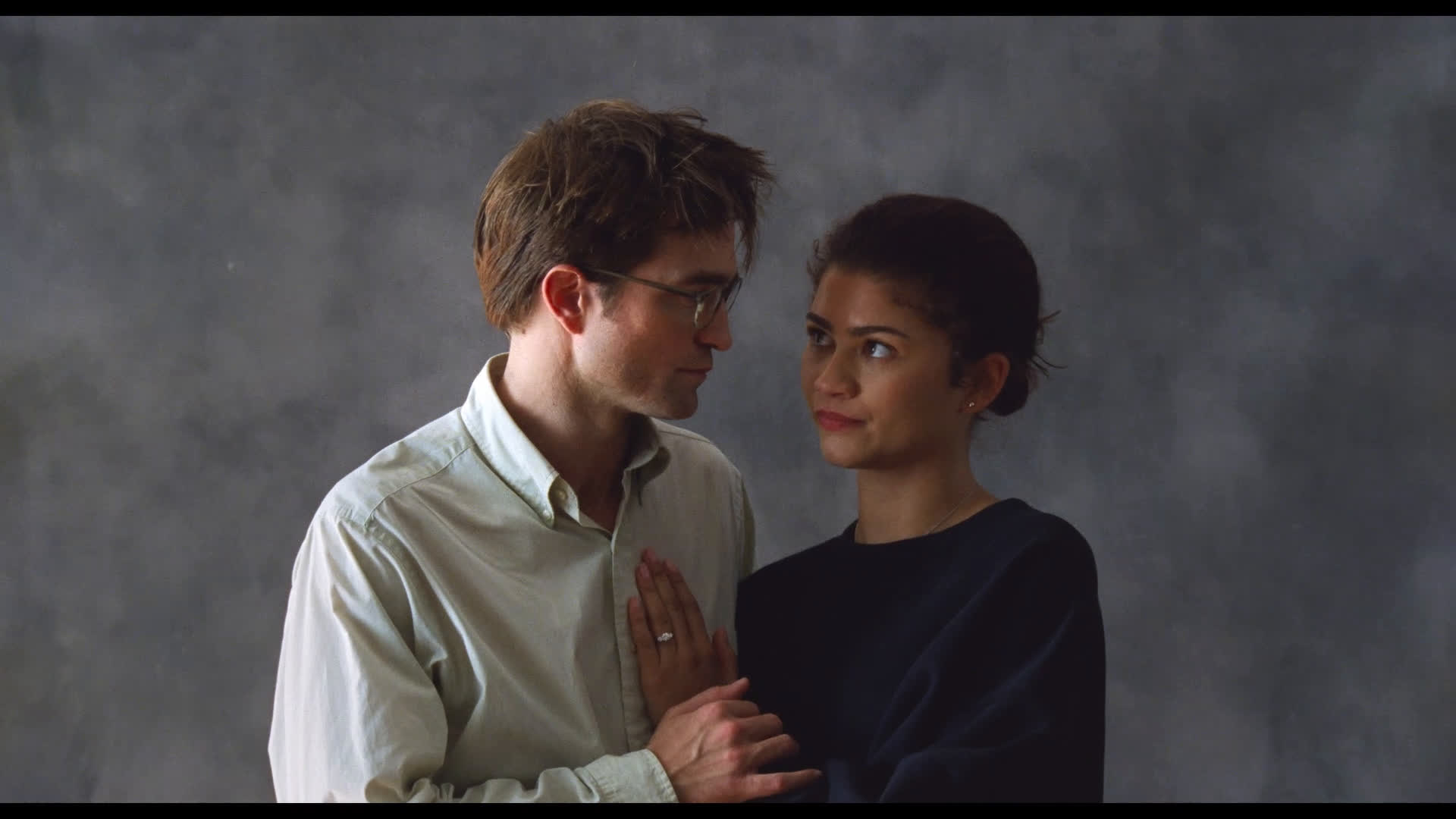
The film starts with what initially appears to be the meet-cute trope at the local coffee shop. Charlie sees Emma, walks up to her and attempts to ask her out rather awkwardly and unsuccessfully at first. Fortunately for Emma, she doesn’t hear what Charlie is saying – she asks if he could do it again. By the end, we see the two of them together, pretending like they’re meeting for the first time again after all that has transpired – the ‘drama’, so to speak. A fresh new start to their relationship, yet are they doomed to repeat the same mistakes? Were they ever compatible to begin with? We get a sense of their relationship being tested by the scene where Emma’s friend Rachel asks everyone in the group to confess the worst thing they’ve ever done. Emma reveals her worst moment is of plotting a school shooting only to not go through with it – a premeditation that hasn’t harmed anybody in reality compared to Charlie’s moment of cyberbullying his classmate or Rachel locking up a child in a closet for hours without acknowledging what she did. But Rachel overreacts as a result of her cousin being paralyzed in a school shooting that has nothing to do with Emma. She instead treats Emma horribly from here on out, causing her problems at work by ignoring her calls. Thus the drama has only begun. Such is the complexity of admitting to others our worst moments, and to have others judge us for them.
Something I do want to express appreciation for is the way the film shows the little hypocrisies we engage in with regards to the push-pull dynamic of opening up and sharing one’s worst moments (which we often encourage to others) versus sharing too little and not letting people in. Rachel is a good example of this – she tells others including her husband to open up about himself, but is also reluctant to do it herself at first. And when the baton is passed on to Emma to open up about her worst moment, Rachel instantly gets on the defensive and becomes judgmental, even though Rachel initiated the question first and admitted to committing an even worse act than Emma, who only premeditated the act. Charlie’s cyberbullying seems like it was potentially worse than Emma’s, yet it gets glossed over. That Emma isn’t a white person herself probably also adds to the animosity from the others given the reaction. And even though the DJ seems to be doing fine at her job during the wedding party scene, Emma is reluctant to give her another chance because of one mistake (near the beginning when she was caught smoking a joint) for which by coincidence she was simply at the wrong place and wrong time. We often hold others to a higher standard than we do for ourselves, and sometimes we may not even realize it. It reminds me a bit of Borgli’s previous film Dream Scenario and the turning point when people started to judge and treat Paul negatively, despite the fact that the bad dreams people were having about Paul do not pertain to who Paul is in reality. Emma may have thought about committing the terrible act, sure – but that also doesn’t truly reflect everything about who she is as a person, or what she has done since then to make things right for others.
Another thing that really sticks out are even some of the bit roles. The DJ part is really funny, as is the wedding photographer speaking as someone who has worked a photography assistant gig or two. The photographer definitely comes across rather realistically as someone trying desperately to work with a client who is just so unwilling to give what she is looking for – the whole ‘shooting’ the family members pun is a nice comedic touch. The only thing that wasn’t quite as convincing is Zendaya’s performance, who I just don’t buy as a former school shooter. Her elegance contrasts sharply to Emma’s teenage self, even if I suppose it’s possible for people to change in that way. But I did like the moments that go into Emma’s background and who she was at school. It’s unfortunate that Emma had to resort to Rachel for being her maid of honor even as their friendship went south. She is lonely and clearly doesn’t have anybody else except her and Charlie. But she could have had more social awareness in the moment: why did she continue with Rachel as her maid of honor anyways? Did she not think Rachel was going to do something that might potentially sabotage what is supposed to be a happy moment? But in the end, the bigger question is: do Emma and Charlie both deserve each other? I say no, and that Charlie sucks for being a terrible partner to her after all he has done over the course of the film as well. But does that also make me the hypocrite for judging Charlie to be worse in that moment than Emma? I wonder.