I was able to attend the Closing Night Gala for the Future of Film Showcase, which screened a little known feature directed by Christopher Beaulieu titled Otium. This was preceded by Brute, a short film by Jérémy Comte. Both films make for a quite interesting pairing – they deal with themes strictly about toiling for one’s art, even as the protagonist’s world seems to be collapsing around them. They also deal with interior spaces; specifically one’s control over the space they use to make their art. For the protagonist in Brute, his anxieties cause him to lose sense of that control as he struggles with making the art he wants to make. For Hanna in Otium, the space becomes not only something she cannot control, but something she does not have access to begin with.
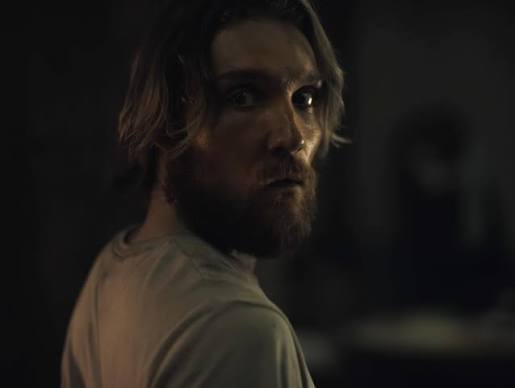
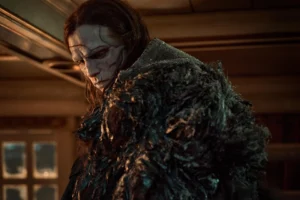
Brute follows a sculptor working in his ramshackle studio with a giant block of wood in front of him. He begins to carve away, but suddenly he experiences visions as his own studio space begins to shift and move, as if the walls are closing in on him. This initial setup to the film did actually remind me quite a bit of Denis Villeneuve’s short film Next Floor, in that both short films take place in dingy, dimly lit and rundown interior spaces punctuated by sudden change. The entire room then shakes as if an earthquake had occurred, with the ceilings looking like they’re about to burst open and things falling to the floor. But that’s where the comparison ends, as Comte takes this in a much different progression and conclusion.
The sculptor toils and toils, despite having these visions that distract him. Eventually we see some of the fruits of his labor, but at a cost: he accidentally injures his own hand during the process, causing him to bleed and smear blood on the wooden sculpture. He tries to remove it, but the stain can’t quite go away. Another vision happens, and now the wooden sculpture has taken form as something completely different than what it originally was. Suddenly there’s a tunnel within the sculpture! He crawls through the tunnel to find out the answer to his anxieties all along: that art gives way to life. And sometimes the labouring, the blood, sweat and tears that it takes to create what you want to create is worth the endeavour and the final result.
This short film seems like a pretty good primer for what is to come next with Comte’s upcoming debut feature film Paradise. Should that make it into this year’s TIFF or any other festivals nearby, I’ll definitely be on the lookout for that one.
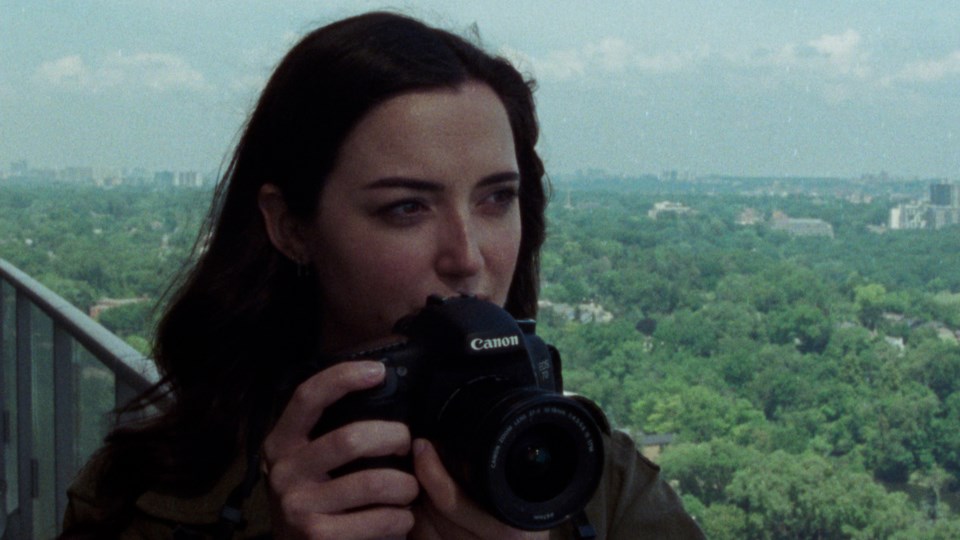
On the other hand is another debut feature by another filmmaker this time around, Otium. I’m a sucker for movies about the gig economy and how it exploits the labour of and traps those very people, which is very much what Otium is all about. It’s not quite the absurd satire of Do Not Expect Too Much from the End of the World in its biting commentary concerning that subject matter, but what’s here is relevant enough for my tastes speaking as someone also from Toronto and who has also seen the realities of working photography gigs in a post-pandemic world. There’s a brutality displayed here about the realities of owning real estate for someone like Hanna or even just renting your own space for yourself. Hanna lives with her parents as she watches her peers, who are so far ahead of her by virtue of having more resourceful parents. To be able to afford the basic necessities of life, to afford a space that you can call your own so that you can do whatever you want is a luxury in this world.
We follow Hanna as she bounces around from gig to gig taking pictures inside rich peoples’ apartments and houses as they are put up for sale in the real estate market. She seems lonely, the result of living at home with her parents, spending a lot of time commuting on the GO train and not having time for anything else except side-hustles and the occasional part-time gig. Some of these gigs turn out fine, but she encounters obstacles along the way. She visits a man’s house to do some photography work while the man asks her what she thinks about her future and acknowledging her situation, only elevating her anxiety further. It\s a very upfront question for a stranger to ask and a rather funny rant by the man ensues as a result. Was that rant supposed to be funny or was it unintentionally so? Not sure, but either way I’ll buy it for now – it’s an interesting moment for sure.
In the meanwhile Hanna also gets held up by a lady who constantly keeps rescheduling her appointments last-minute after arriving at the exact same building, taking away time that she could have used to book other photography gigs or partake in her art project on the side. She’s also a bit shy and reserved, as one of the job interviewers she talks to during a virtual chat points out. Speaking from experience in the photography world, being that introverted can definitely be a problem when it comes to moving up in a professional capacity. This is further exemplified during the scene when she is taking a portrait photo of her friend Greta on the couch. The lack of assertiveness and self-doubt over whether she is doing the right thing when it comes to taking the photo clearly shows.
In the meanwhile she takes up other jobs like teaching Zoom classes to very young children and door-to-door deliveries as the photography gigs start drying up. She also speaks of an art project she is conceptualizing to her one and only friend she can confide with, Greta, who has her own apartment and place to live on her own by virtue of having parents who can afford it. Greta is also a filmmaker herself who longs for more in her life and has her own struggles despite her privilege, something the film acknowledges. There’s a scene that happens later on where Greta holds a public screening for her film where Greta’s introduction nearly word-for-word plagiarizes the pitch that Hanna gave her for her art project. Kind of a mean thing to do that while also inviting that same person to your screening, but I digress.
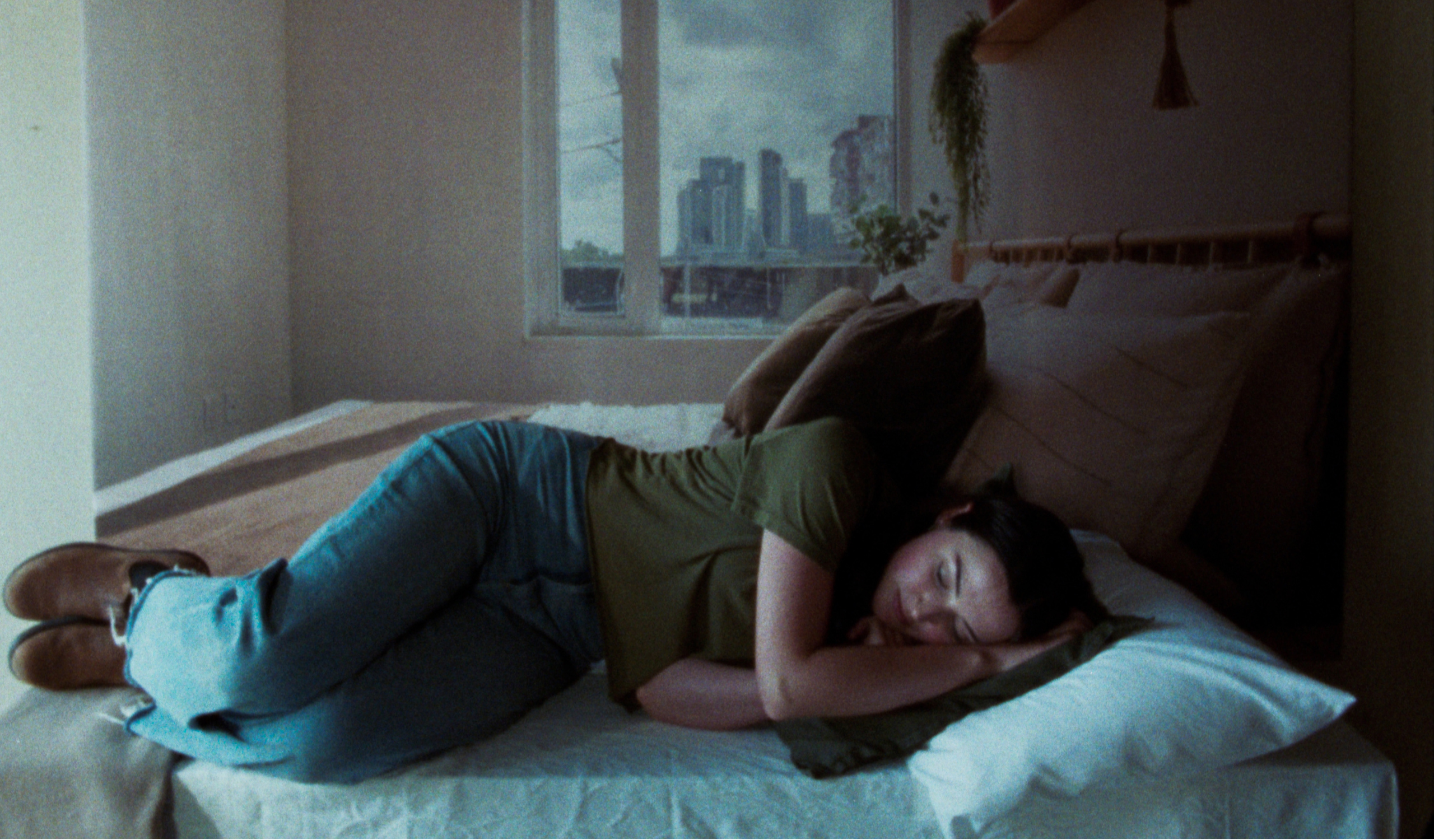
I appreciate a few things about the film. The decision to shoot on 16mm to reflect the separation between Hanna’s world and the reality. There’s a really interesting scene involving her art project where she takes a picture of a bedroom with a bed in the foreground, hangs up an enlarged size canvas of it in her parents’ garage and sets up a makeshift bed in front. She sleeps on the bed and takes a self-portrait of her sleeping in front of the photograph, almost as if she were sleeping in that same bed in that photograph of the apartment. It’s like a merging between those two worlds, probably the closest Hanna will ever get to being in that world of luxury. Hanna shoots using a DSLR, but eventually at the end, we see Hanna taking photographs on film. The digital photos are a reflection of the reality that she cannot attain for herself – the apartments that she cannot have. Interestingly enough, we are also seeing these digital photographs on 16mm, as well as the Zoom calls – like we are seeing it through her eyes. The camerawork consists of either static shots or 360 camera pans, which give us a true sense of the spaces that Hanna encounters and inhabits, although I wish there was a bit more variety to the camera movements. I also appreciate the use of archival footage of Hanna as a child, which according to director Beaulieu comes from his old family videos and recordings. It illustrates the gap between the promise of a better, idyllic life during one’s childhood and the reality that kicks in during adulthood. It may have the feel of a low-budget amateur indie production coming from Toronto, but I still found myself impressed by the director’s insistence on having every shot be in one take due to obvious budget constraints.
There are some things here that I wish would have been expounded on further, like introducing the angle of her potentially finding someone to date to split the rent with. That conversation gets teased a bit later with the scene where Hanna meets another man at a party and sleeps over at his place, but it’s a plot thread that doesn’t go anywhere since we do not see him again after that. Similarly is the scene involving the overactive resident who threatens to call security on Hanna. The rather confrontational interaction is somewhat realistic; if you ever find yourself hanging around Bridlepath, Forest Hill or any number of rich neighborhoods in Toronto you will often encounter people who are very guarded and defensive about the neighbourhood when it comes to outside visitors. But again, it’s also a conversation that doesn’t lead anywhere – Hanna later on goes back to the same apartment building, inside Paulette’s condo, and never is she confronted again. The script just doesn’t support the inclusion of these dramatic confrontations. Neither is the moment when the job interviewer criticizes Hanna for not having a “nicer” background to better suit their rich clientele; that’s such an easy fix on Zoom. Why not just replace the background or blur it?
These are not very major quibbles however. It helps that the film is just 78 minutes long, and while some topics like the ones I’ve mentioned could be explored in greater detail, it doesn’t overstay its welcome. I definitely look forward to whatever Beaulieu has going on in the future; as far as up and coming Canadian directors go he’s certainly one to watch.