Double Freedom follows the story of Misael, a laborer who chops trees and sells timber for a living. This marks 25 years since the release of La Libertad, a film which takes place in a much earlier part of Misael’s life (played by the same actor Misael Saavedra) and in which Double Freedom serves as both a sequel to that film, a coda of sorts and a companion piece that can be read separately from La Libertad – although I think having requisite knowledge of La Libertad certainly helps to inform greater understanding of the themes of Double Freedom. Double Freedom begins in very much the same fashion as La Libertad: Misael is once again at a campfire cooking food and eating away during the night, which cuts to him working right away in the forest. Lisandro Alonso has gone to great lengths towards recreating the look and the pacing of La Libertad with its grainy cinematography, the lush green outdoor setting and the cinema verité fly-on-the-wall observational approach of capturing Misael hard at work with the long-takes. Misael is noticeably much older, his face and skin clearly wrinkled after 25 years. His movements are a little slower and he has gained a bit of weight. But he can still work his way through a tree so long as his trusty axe, chainsaw and shovel are there and his aging body does not give in.
He skins the bark off of the logs and proceeds to load them onto a pickup truck that he borrowed from a neighbor of his in a manner not too dissimilar from his routine as a younger man in La Libertad. There’s a shot this time around where he is sitting there on the bed of the pickup truck after having loaded the lumber, as if in deep thought. Is he just taking a quick rest? Or is he thinking about the plight of his situation? After all, not much has changed for him over the past 25 years of his life – he still lives in the same makeshift cabin out in the middle of the woods, living a poor, isolated and lonely life without a family or any companionship to speak of besides his trusty dog. Not even a modern smartphone to speak of or other technological comforts. He doesn’t interact with others unless it is necessary, like with his neighbor or the local convenience store clerk. We don’t get very much backstory into what else he has been doing in the years since La Libertad. His future seems bleak as far as his economic mobility is concerned.
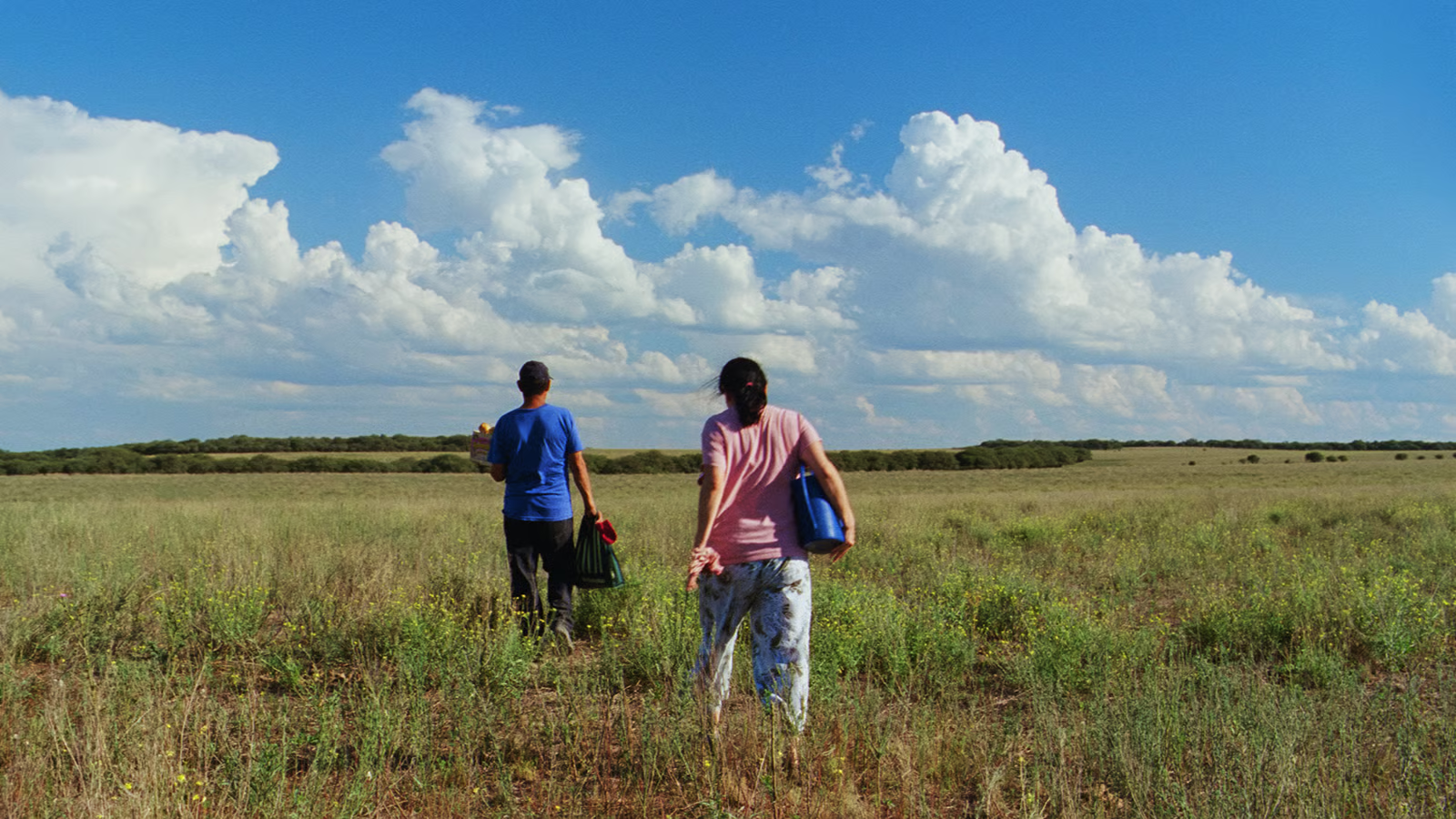
This all changes of course once Misael’s sister Micaela enters the picture, who is suffering from an unspecified mental illness and requires constant around-the-clock care. Misael visits the institution where Micaela is staying and is informed that the clinic would be closing due to cutbacks from the government. The clinic has been reaching out to patients’ family members and their loved ones to discuss alternative care arrangements. Misael is faced with a choice; transfer her to another location and keep her locked away where he may not be able to see her or find some other way to take care of her under his responsibility. He opts to care for her. This presents some big challenges for Misael; the accommodations he has are not quite suited for this task. Even the clinic itself provides way more material comforts for Micaela than what Misael has to offer. Nevertheless, this provides an opportunity for Misael – for once he has another companion out there with him after so many years. And as long as Micaela takes her medication, everything will be fine.
The outcome is quite expected and inevitable. Misael may know the land and has the survival skills needed to live out there, but not Micaela. In that regard Double Freedom does not have the shock factor of La Libertad – there are no animal killing scenes like with Alonso’s earlier films like Los Muertos. The shock value of La Libertad does add an unpredictability and a subversion of expectation to Misael’s lifestyle. It may seem peaceful and quiet at first to be living out there alone, but it’s also harsh and brutal like the dog-eat-dog world of nature itself. Here, however, it is more about a journey that serves to reinforce a greater point about Argentina’s economic situation and the slow descent into hopelessness and tragedy as a result of government cutbacks that affect real people beyond the stories of Misael and Micaela. It’s not something confined to the film itself. Much of this is a reflection of the ongoing political and economic climate in Argentina right now. It is the reality.
There is a very beautiful shot here of Micaela out in the forest, her hand touching the bark of a tree. It is as if in that moment Micaela has found clarity and solace, able to concentrate on the environment around her. A break away from her usual thoughts and struggles before her mental health pulls her away again, into the forest away from Misael. Perhaps Misael may be free to roam the lands, but that freedom comes at a very high price.