Yuula Benivolski’s feature-length debut is the sprawling documentary The Black Box is Orange, a film that covers Benivolski’s early years growing up in Shlomi, a small militarized town in Israel. The film’s structure covers ten chapters, each detailing many various parts of her childhood to early adulthood living in Shlomi as well as the history of the town that dates back more than a hundred years. Soon enough, what appears at first glance to be a small unassuming town among many has a lot more lurking underneath the surface. It is a town often neglected by the government – considered among the poorest, and has a bad reputation among Israelis and those who know of the town. We learn that much of the town was also built upon the ruins of another town (al-Bassa) that had previously been destroyed and razed during the Palestine War back in 1948, a different war yet all interconnected to the current ongoing conflict in Gaza which still affects the town to this day.
While watching this, I got the sense that a lot of Benivolski’s work in summation has been building up to this documentary for a long time. It is not just the fact that she has compiled so much archival material from her own life and research that spans decades, but many of her short films also feel like little windows or snippets into certain periods of her own life and background. For example, Eclipse in the Garden is one such short film that is about her mother Rose, who was called ‘Roza’ in her mother tongue, and how the Russification of the USSR forced her to abandon her own language and culture – and in the process her own identity. Much of the short film involves super 8 footage of roses being watered, a connection not just to her mother’s own desire for a garden but also her mother’s name. The Black Box is Orange feels like a monumental undertaking by comparison, as many of its chapters could also serve as short films of their own, each one offering a glimpse into a certain part of Benivolski’s life or background.
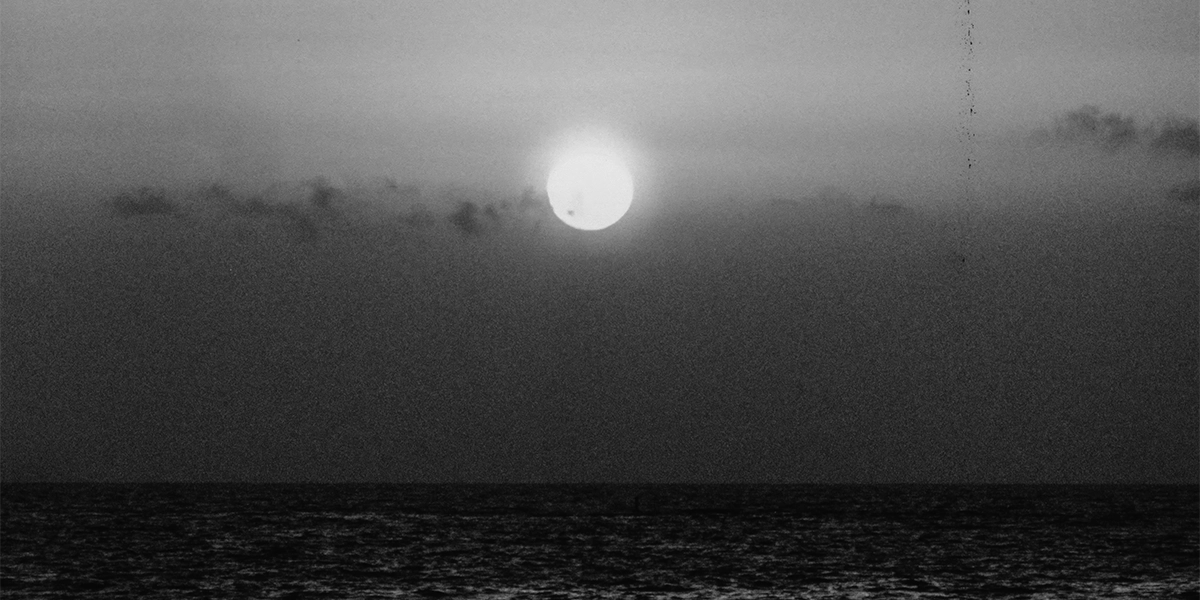
Much like Eclipse in the Garden, The Black Box is Orange also begins with similar flowery imagery and old analog footage of the landscapes with its flora, the beaches and the waves crashing in. There’s a black-and-white shot here of the camera taking on a first-person perspective walking on old cracked pavement. Much of what we see here foreshadows the situation that is to come. It is a captured memory of a time and place in Benivolski’s own life, long before what it probably looks like today. The land that you see in this footage now no longer exists in the form that you’re seeing, as much of it has been torn apart and ravaged by the ongoing never-ending conflict between Israel and Palestine over the years. That cracked pavement probably was meant to be something else – perhaps there used to be houses standing on the same land, where people used to live. Now, it’s nothing but flattened.
We observe many old photographs from Yuula’s life, her relatives and friends as well as what life used to be in the town long before the destruction. She recounts and narrates many anecdotes during this period in her life. One such anecdote has her talking about her first crush from the ages of 13 to 21. Sometime later, she talks about walking back home one night only to find that very same crush attempt to sexually assault her, only for her to successfully push him aside and escape. Another anecdote has her recounting the story of IDF soldiers invading Palestinian families, stealing and hoarding any property they can. This even includes stealing family photographs and heirlooms away from these people, violating their privacy over and over again until there is eventually nothing left. Without photographs there are no memories, no traces or evidence of their existence in this world. If you erase all the evidence, perhaps you can make it seem like nothing really happened.
There is a pretty notable and rather mind-blowing chapter here detailing the “Little White House” up on a hill with a diagonal path that she had observed as a child over and over again. This little white house is perched atop a cliff right above the Rosh Hanikra grottoes, where there used to be a tunnel underneath with a railway that connected to Lebanon. Nowadays this railway has been defunct for a long time, and leads to a brick wall. This Little White House has existed for well over a century, being depicted in drawings of the grottoes in the late 19th century long before the age of black-and-white photography and still exists today, its role now having changed to serve the needs of the Israeli military industrial complex as opposed to being treated as a site of cultural and historical significance. Visitors today can ride the cable cars – among the steepest in the world – as well as stroll through what still remains of the tunnel. The tunnel leads to a cinema inside, playing a propaganda film over and over again that ends in a bang, an explosion much like the actual one that sealed off the tunnel and the railway from the Lebanese side forever.
There is a sense in which the film does spell out the conclusion that you’re meant to take away from this, especially given the ending of the film which incorporates footage from a march and demonstration in support of Palestine back in 2022 – but the conclusion is absolutely justified, and it would be remiss to doubt Benivolski’s own perspective on the matter. Some chapters do feel a little more emotionally poignant than others, however they all contribute to a fascinating and interesting tale about Benivolski’s life. But I particularly appreciate the inclusion of an interlude with a baby in the middle of the film and Benivolski’s explanation for it. Sometimes it’s nice to just look at a baby and not have to always be reminded of the horrors of the world.