This latest feature from Nicolás Pereda has him collaborating once again with the usual actors and faces we’ve come to expect at this point. Returning are familiar character names like Rosa, Luisa, Paco, Teresa Sanchez as the mother and most importantly Lazaro, played by Gabino Rodriguez. While the usual formula with a Pereda film is that these stories and people exist in their own distinct standalone worlds, the thematic threads link together each body of work in a fairly concurrent fashion. Past films like Fauna and Copper deal with class struggles, the exploitation of labor (mining in particular being a subject matter for both films), the importance of a tight-knit nuclear family despite the challenges and the subtleties that risk pulling such a family apart, plus a yearning for a better life outside of gossipy small-town circles. Fauna and Lázaro at Night both deal with our own innate desires to retreat into our imaginations, seeking a reality better than the one we exist in. Both are also about the world of film itself, the collaborative process between directors and actors and the unglamorous lives of many working actors when one is in between auditions and gigs. Much of this also pertain to Pereda’s own creative process working with his frequent collaborators, who he has worked with over the years and whom he might as well considers family.
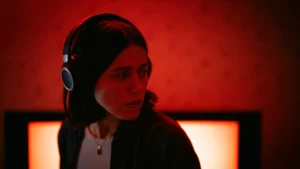
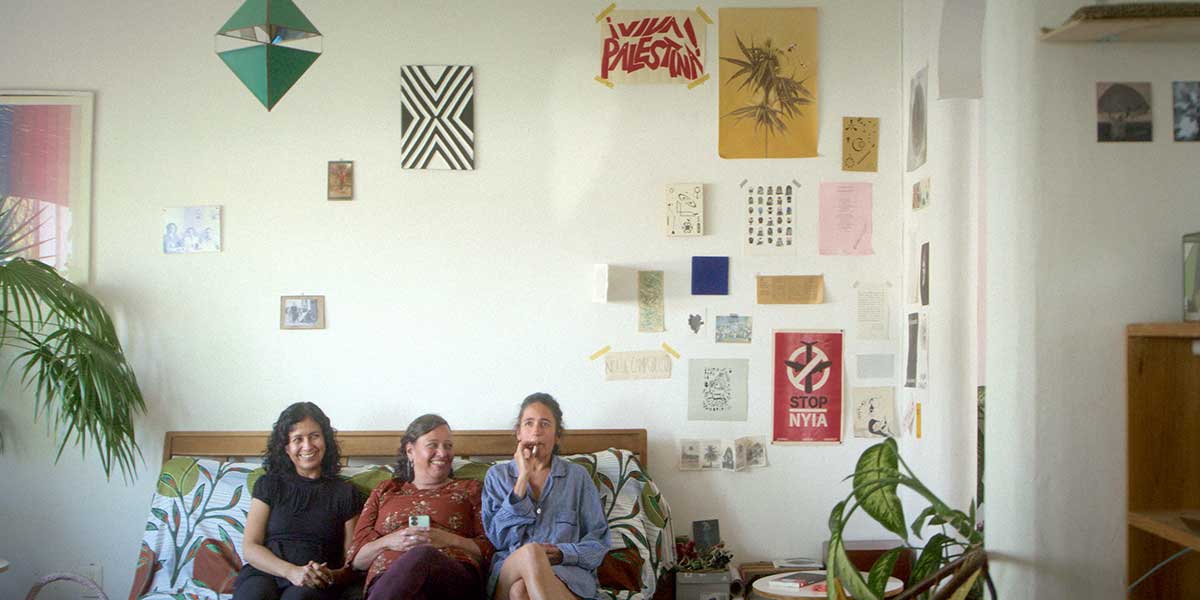
Everything Else Is Noise fits in comfortably with the rest of Pereda’s filmography when it comes to these topics. This time around we are examining a musical family, centering around Rosa, her colleague Tere and her daughter Luisa. Rosa is preparing for a TV interview that dives into her career and her music, filmed and directed by none other than Lazaro. This may be the closest Pereda has come to making a Hong Sang-soo movie, with the emphasis on not only family relationship dynamics and the many references to art plus the creative pursuit of it as a career. It’s also about the ways in which pivotal information about these different characters and their emotions are revealed through communal activities such as dining together or filming together, as we come to see much later in the film.
It opens with a pretty strong long-take of a gridlocked intersection, traffic stopping and moving. The disharmony of the flow of traffic is much like the harmony of music – easily interrupted by many external factors. It is also like the harmony of our relationships to our family and loved ones and the forces that threaten to change or disrupt that harmony. The preparation for Rosa’s interview as well as the interview itself is also an illustration of this chaos, representing this clash in relationship dynamics between our various characters. Throughout much of the film, we hear the sounds of traffic outside of the apartment, cars loudly honking in the distance. A baby is crying in a neighbouring loft, as is a dog constantly barking. In the meanwhile, the building often receives many frequent power outages despite Tere’s protests that it doesn’t happen very often.
The randomness of these events as well as the ever-changing rhythm of the soundscapes creates obstacles for the interview film shoot, as Lazaro seeks to do things the way he wants, wanting to control what he cannot as opposed to adapting to the circumstances. Rosa, on one hand is very stern on giving specific answers that are very honest and upfront about her own life experiences and upbringing. On the other hand, Tere suggests to her to embellish her anecdotes in order to give the interview more flair. There is a moment where Lazaro directs Paco to point the camera at Tere as she is telling her exaggerated story about her strong sense of smell and a rat being the guiding force towards her journey on becoming a composer. Tere later changes it to involve a bird instead of a rat, which Lazaro notices, but also brings forth the question – does such embellishment matter, so long as it sounds interesting to us and we do not notice it? Either way, Tere is the one who Lazaro should be filming, yet despite there being a natural interest and inclination, the problem is that Tere is no professional composer. We sense the lack of a shared connection and harmony, yet the interview with Rosa must go on.
An interesting pivotal moment in the interview comes when Lazaro tries to ask Rosa more specific questions about her compositions. Many of us have a tendency to overanalyze details and give interpretations of things that were never really the artist’s intention to begin with. Even Pereda himself is guilty of this and has admitted to it during the Q&A for the screening I attended. Such is the case with the oft hilarious exchange between Lazaro and Rosa, whereby Lazaro uses terms like “the Schoenbergian tradition” to describe Rosa’s pieces, often speaking of the chromaticism as well as throwing out other musical theory terms. Rosa, on the other hand, is bewildered by this talk – she thinks things practically. She is more interested in microtones than chromatics. She cares more about exploring sounds she has never made or heard before on a cello. Her exploration of music is more about what comes to her naturally rather than theoretically. Such is also the case with her answers to his questions – brief, succinct and to the point.
It all culminates in a meeting between Maestro Estévez, the father of Luisa, a renowned and celebrated musician and composer. Their relationship seems a bit distant, possibly estranged, as Luisa points out that all he cares about is the one composition she has written many eons ago as opposed to what she is working on nowadays. Eventually Lazaro returns to the apartment, having forgotten to take his batteries, and instead stays to have a chat with the Maestro himself. Like attracts like. There is something unfortunate about the situation at hand as Luisa and Tere are clearly smart and have more agency than to have to deal with them. Sometimes, all we can do is laugh.